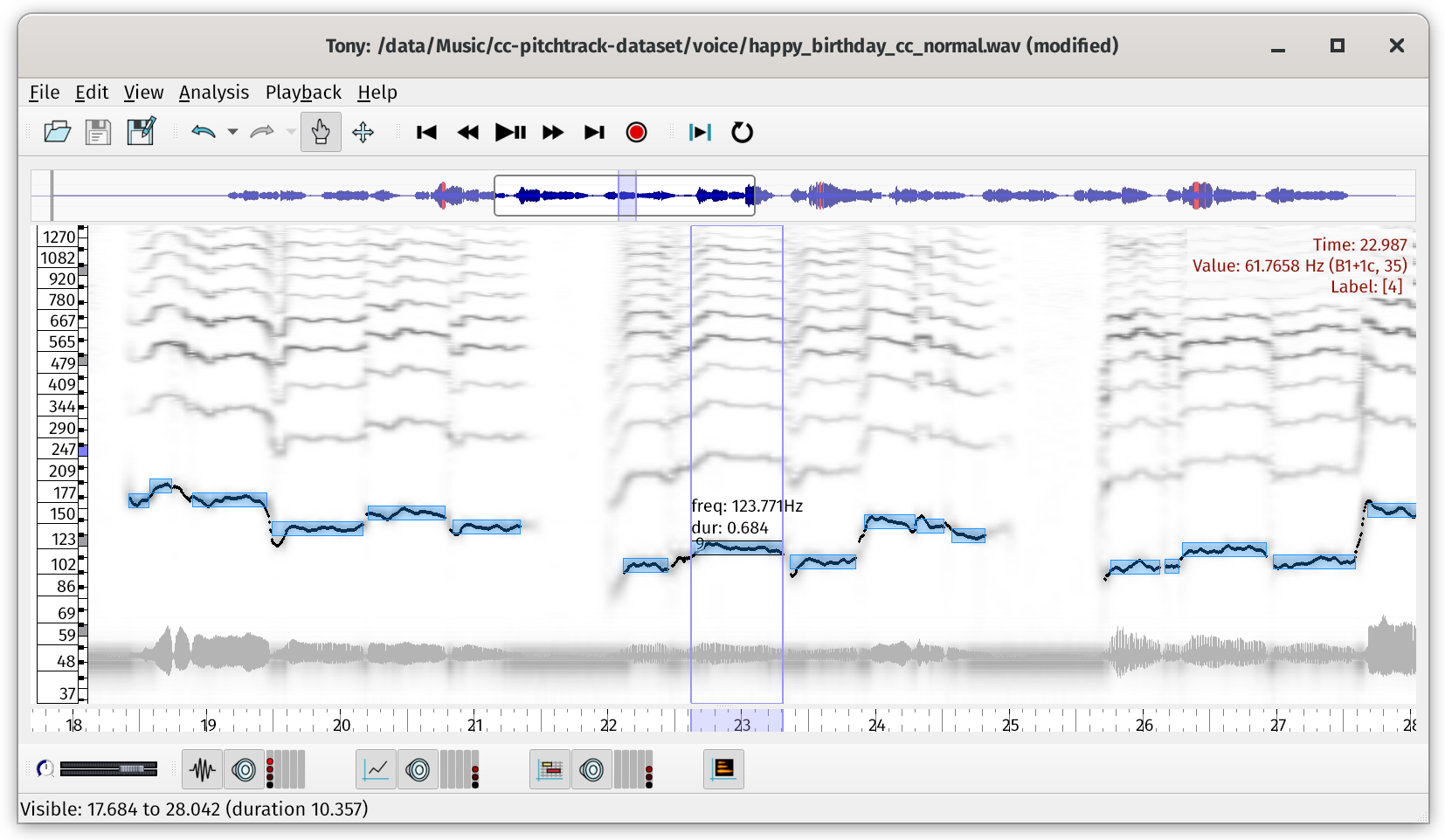
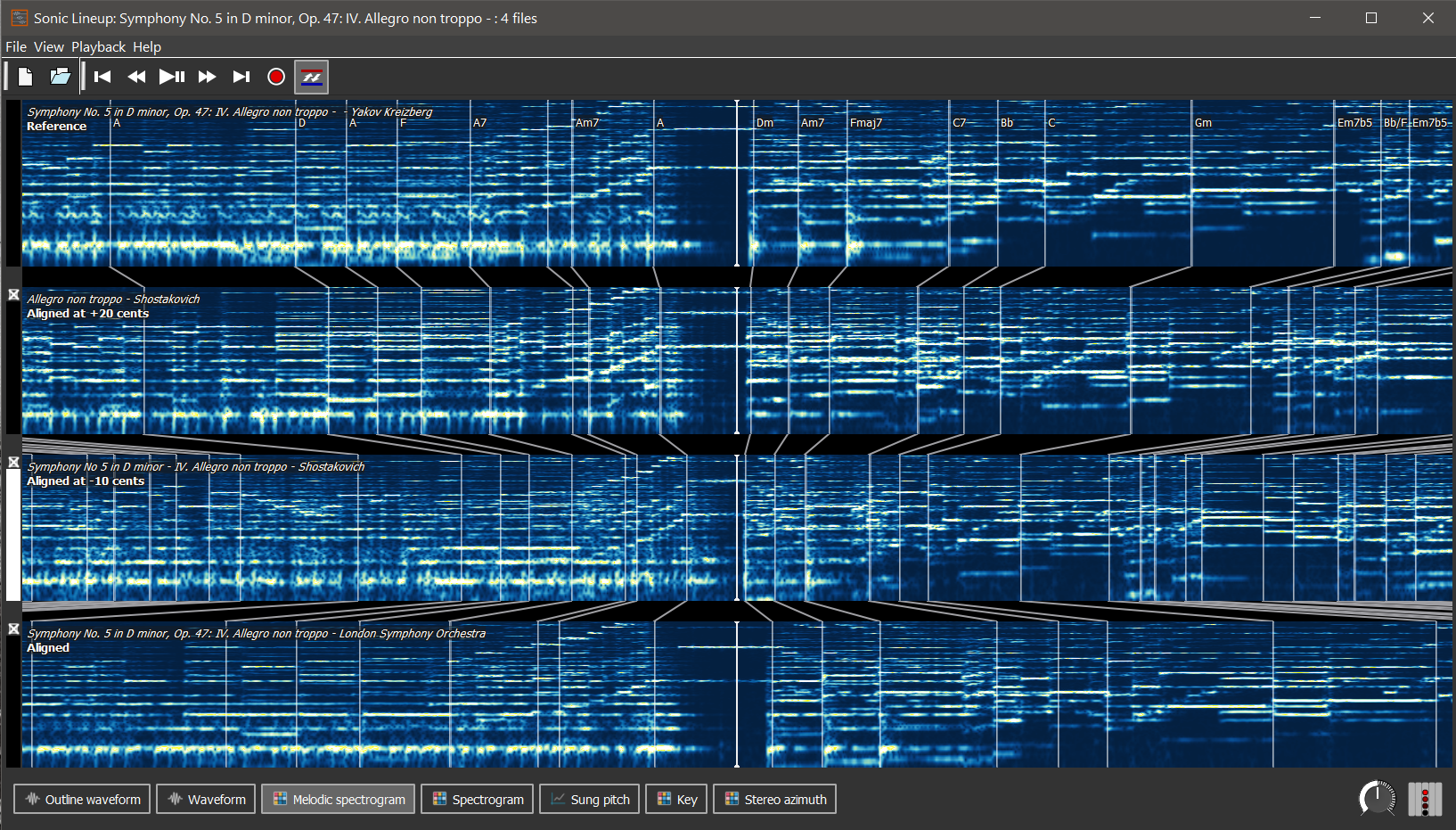
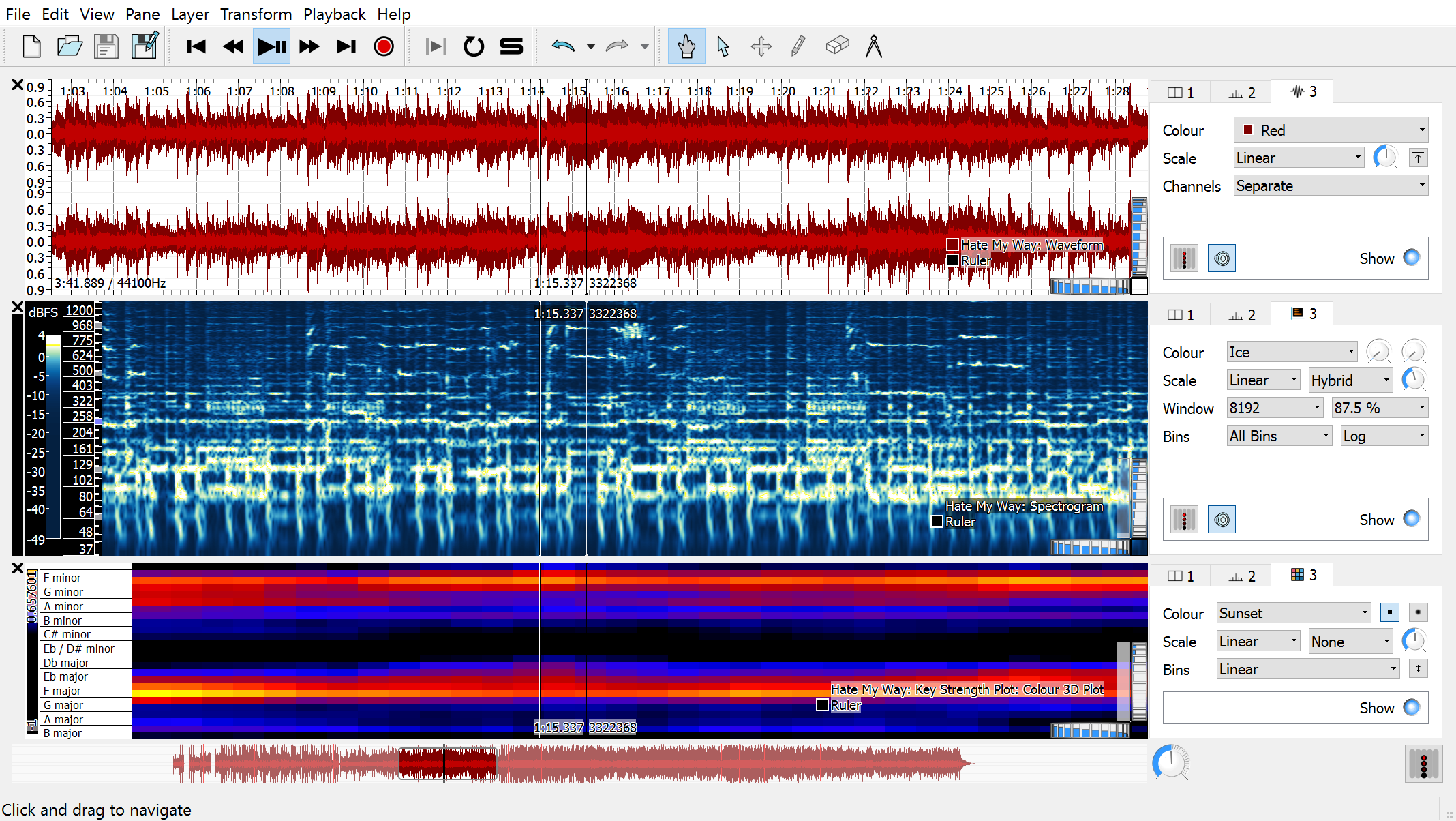
Sonic Visualiser is a free, open-source application for Windows, Linux, and Mac, designed to be the first program you reach for when want to study a music recording closely. It's designed for musicologists, archivists, signal-processing researchers, and anyone else looking for a friendly way to look at what lies inside the audio file.
Sonic Visualiser version 5.2.1 was released on 21 March 2025. Download it here!
Sonic Visualiser is one of a family of four applications:
Citations: If you are using Sonic Visualiser in research work for publication, please cite (pdf | bib) Chris Cannam, Christian Landone, and Mark Sandler, Sonic Visualiser: An Open Source Application for Viewing, Analysing, and Annotating Music Audio Files, in Proceedings of the ACM Multimedia 2010 International Conference.
However, a tool is only as good as the person operating it. To help you get the most out of your software, we’ve compiled this "best-of" user manual guide, focusing on the features that actually move the needle for print shops. 1. Getting Started: The Caldera Interface
Caldera breaks the process down into Open, Compose, and Print . Don't skip the "Compose" stage—this is where you can catch layout errors before wasting expensive media. caldera rip user manual best
If you’re in the wide-format printing industry, you know that your RIP (Raster Image Processor) is the brain of your entire operation. stands out as one of the most powerful, Linux-based engines designed to handle complex workflows, color management, and high-speed production. However, a tool is only as good as the person operating it
This is where you manage your files. Best practice: Keep your file naming conventions consistent (e.g., Client_JobName_Size_Material ) to make searching easier. Getting Started: The Caldera Interface Caldera breaks the
Master the Heat: The Ultimate Caldera RIP User Manual & Best Practices