Smaart 6.1.0 Os X.dmg _verified_ -
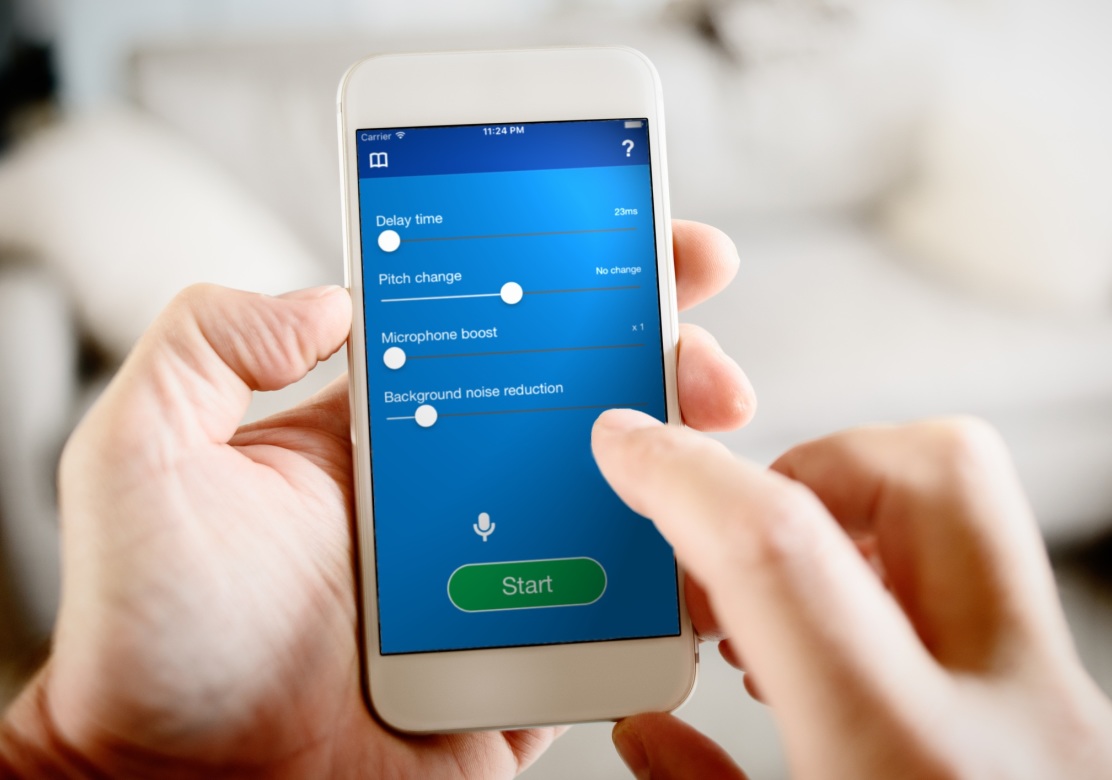
Delayed Auditory Feedback can help slow your speech so you can communicate more clearly.

Delayed Auditory Feedback can help slow your speech so you can communicate more clearly.
Designed for people with speech disorders who speak at a fast rate such as those who stutter/stammer or have a neurological condition such as Parkinson’s Disease, brain injury and more.
It helps people to slow their rate of speech which makes it clearer to others. It has been designed and tested by a specialist Speech and Language Therapist.
Delayed Auditory Feedback (DAF) works by enabling someone to hear their speech in an altered manner. This disruption to the normal auditory feedback loop causes the speaker to slow down and thus speak more clearly.
Record your voice whilst using DAF and hear the results for yourself.
DAF Pro requires headphones to work effectively. Use wired or Bluetooth headset.
DAF Pro works when your device is locked so it won't drain your battery whilst your screen is on.
Measurements were stored directly to the hard drive, preventing data loss during power failures—a critical feature for field engineers.
Rational Acoustics explicitly warns that Smaart v6 is not compatible with OS X 10.7 (Lion) or newer due to significant changes Apple made to security permissions and 32-bit application support.
The file is the disk image installer specifically for Mac users. Key Features of Smaart 6.1.0 Smaart 6.1.0 OS X.dmg
Compatible only with Mac OS X 10.4 (Tiger) through 10.6.8 (Snow Leopard) .
Because Smaart 6 is legacy software, it is strictly bound to older hardware and operating systems. Measurements were stored directly to the hard drive,
Recommended requirements included a 1 GHz G4/G5 or Intel processor and at least 512 MB of RAM. End of Life and Modern Alternatives
This update introduced several refinements to the measurement engine and user interface: Key Features of Smaart 6
As of September 2022, Smaart v6 reached status. Rational Acoustics no longer provides technical support, installations, or activation services for this version.
Introduced the ability to route different input channels into pairs, which allowed the software to remember specific calibration data and delay offsets for each pair.
We had the pleasure of been featured by the following orgnaisation.