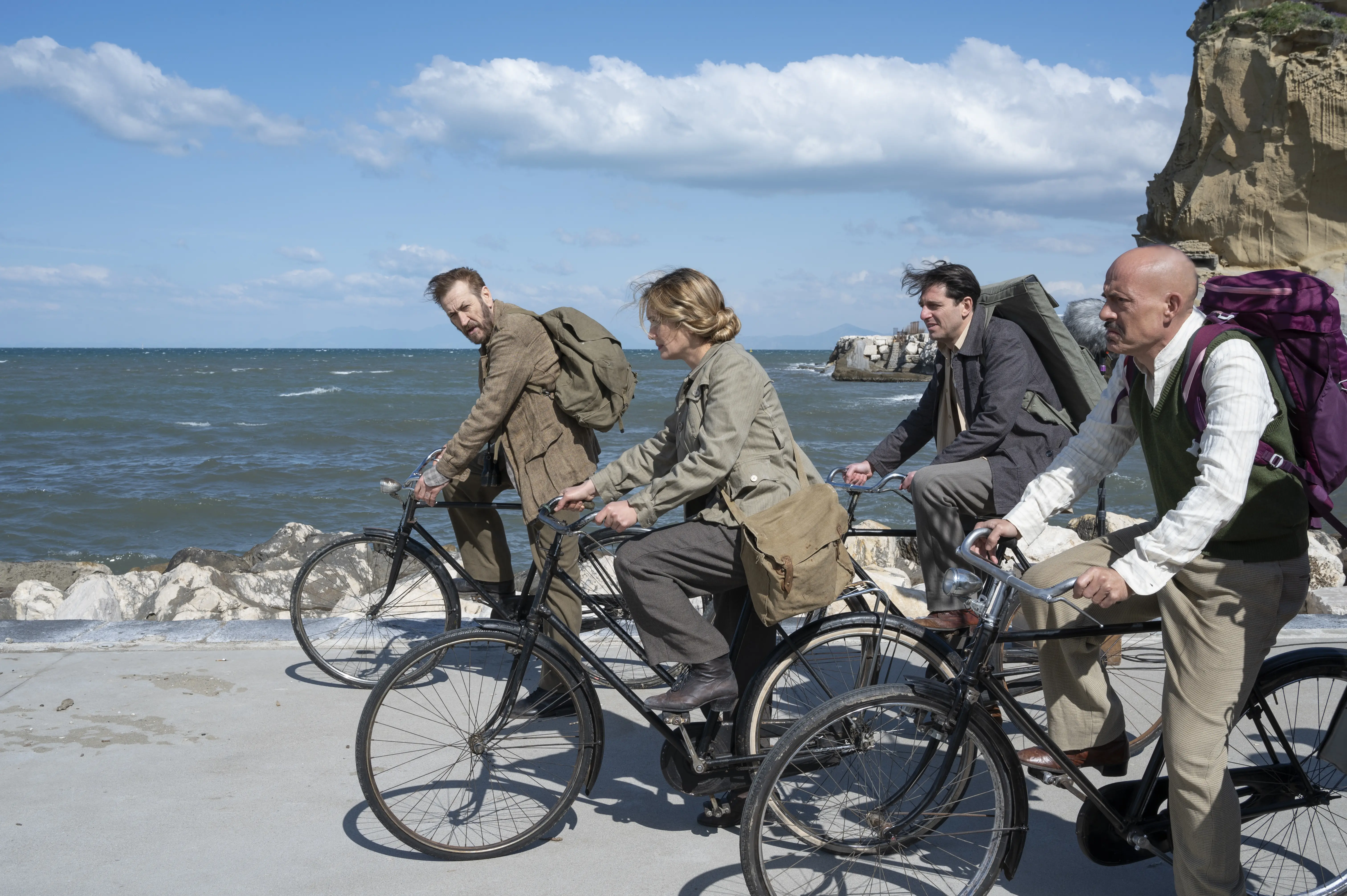
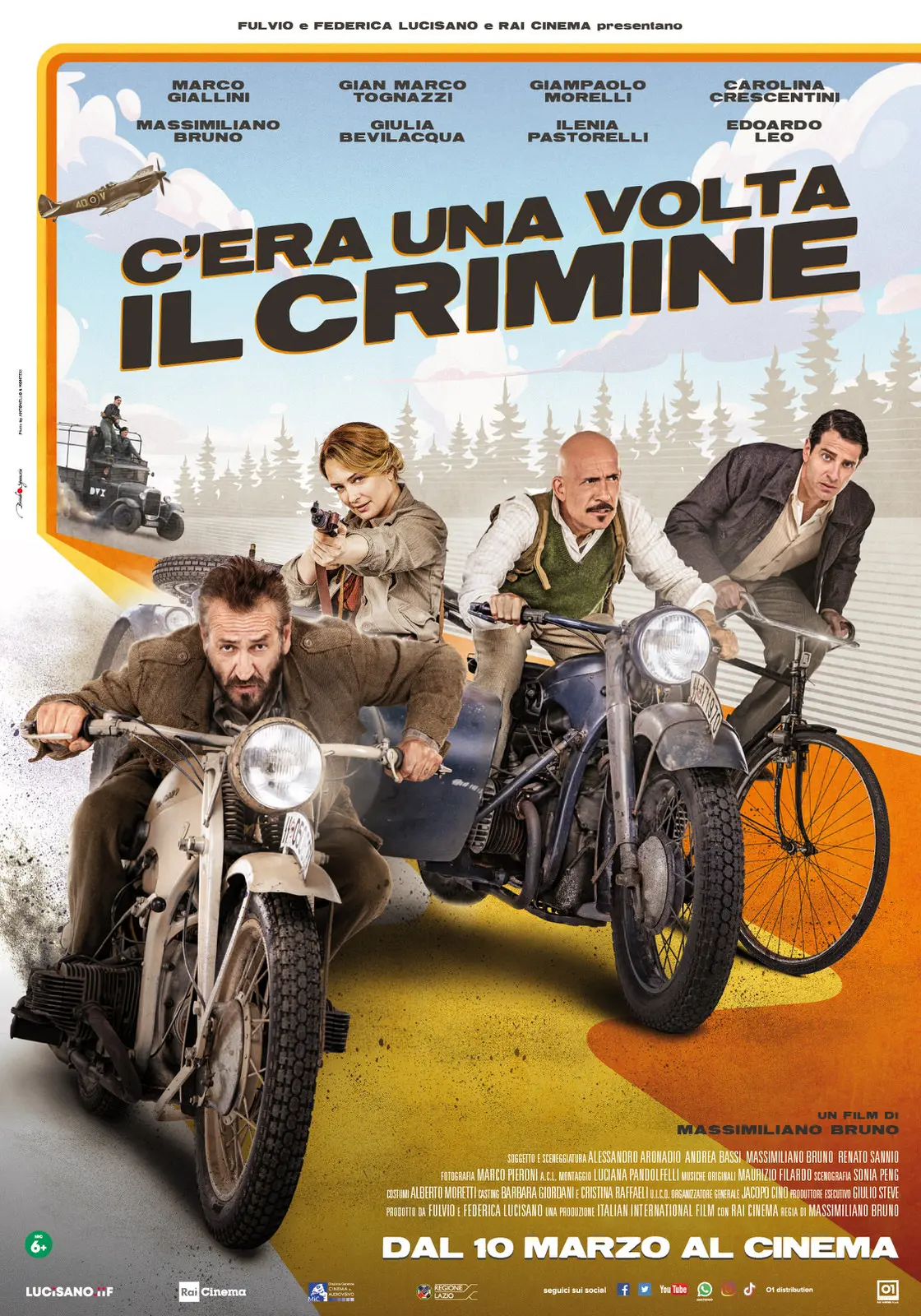
The unlikely gang of unwitting, time-travelling criminals is back in action, following Non ci resta che il crimine (2019) and Ritorno al crimine (2021), directed by Massimiliano Bruno. Their goal in this third film is to return to 1943, to the days preceding 8 September, and steal Leonardo da Vinci’s most famous painting, the Mona Lisa, from the French. In their travels they meet famous characters and stumble into real historical events in an Italy overwhelmed by WWII.
By the end of the fast animated opening sequences, over the film titles, the gang has already stolen the Mona Lisaand is now by the aqueduct of ancient Monterano. Everything seems to be going well, the three prepare to return to the present-day with their haul. The time-travel portal is located in Camogli, however it will not be simple to travel through Italy in the chaotic aftermath of the armistice, amidst Nazis, Fascists and partisan fighters (“they haven’t built the A1 motorway yet!”).
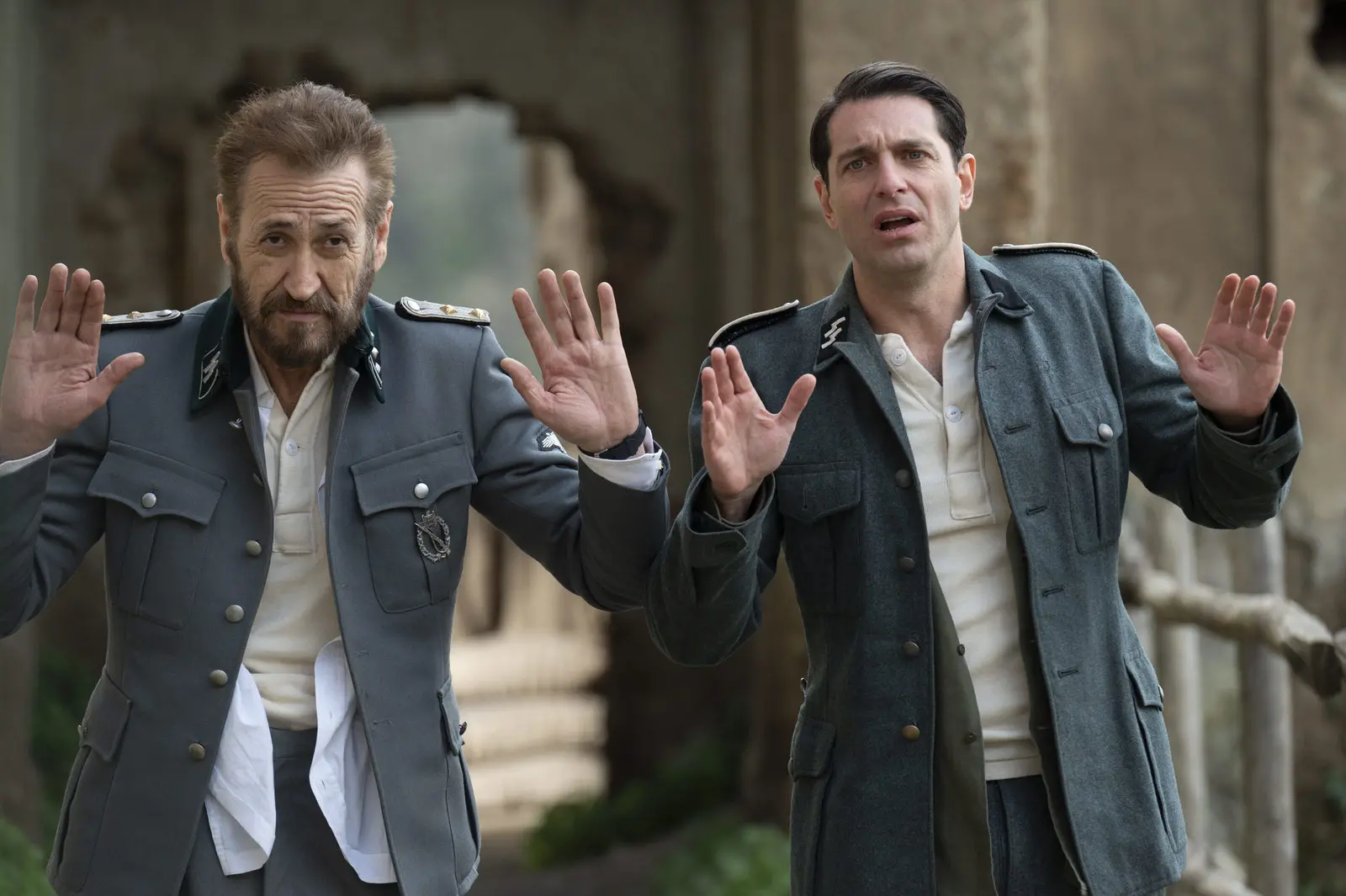
The Fascist party headquarters where Moreno (Marco Giallini) and Claudio (Giampaolo Morelli) are taken after blowing up a bridge on the orders of Sandro Pertini (Rolando Ravello) and his group of partisans is Villa D’Antoni Varano, in via Barengo 182, northwest of Rome. King Victor Emanuel is expected to arrive at the Castle of Crecchio, actually Brancaccio Castle in San Gregorio da Sassola, to the east of Rome. Wondershare Filmora 9.1.0.11 -x64- Multilingual
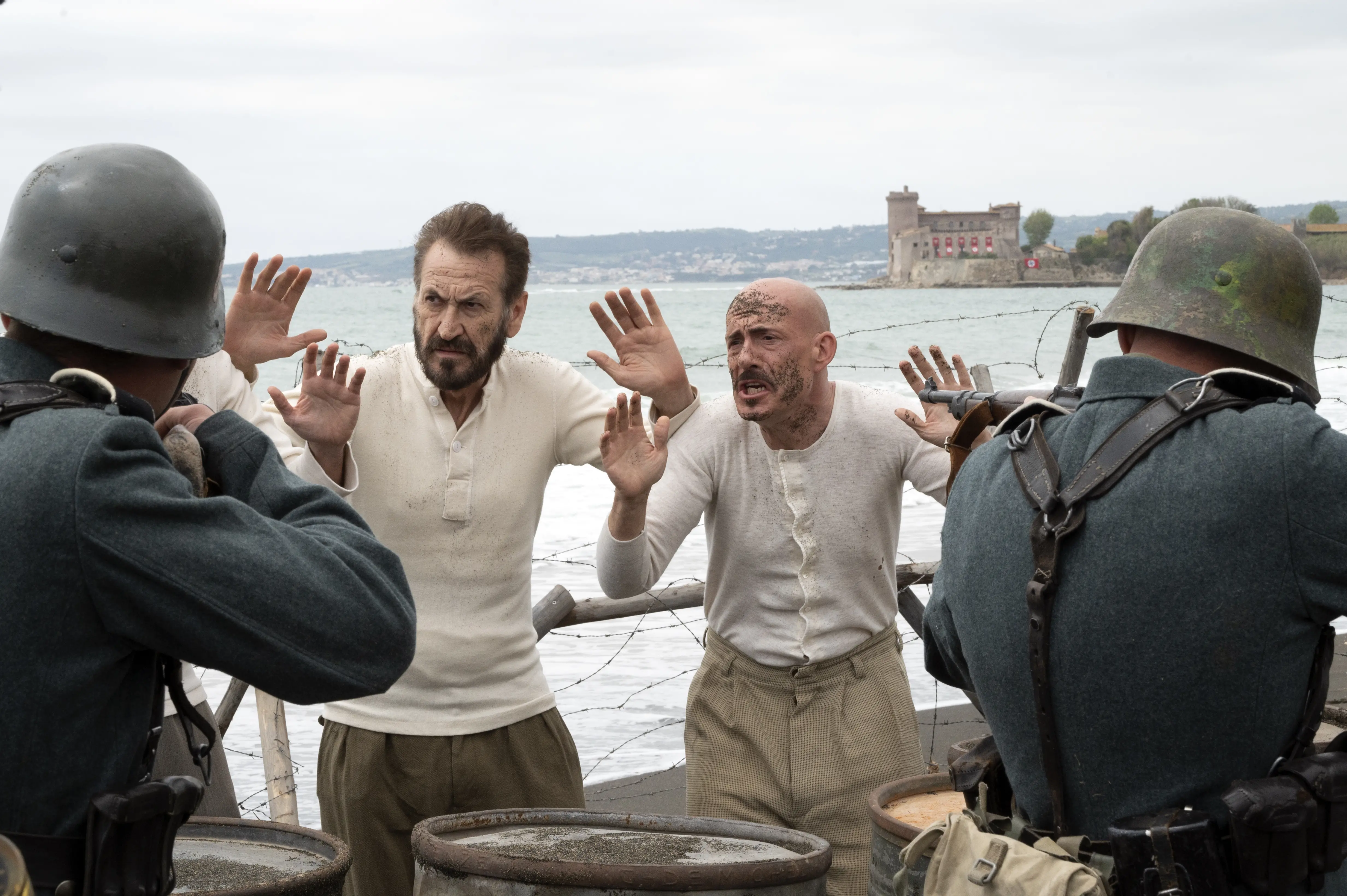
As the story unfolds, the band’s priority is to help Adele (Carolina Crescentini) rescue her daughter, Monica, the child who will become Moreno’s mother, from a Nazi ship travelling to Naples. On a beach in Bacoli, near the Marina Grande dock, Claudio improvises a conversation in pure Neapolitan dialect to find out if the ship has docked: the headquarters of the Nazi army in Naples is actually the Castle of Santa Severa, in the Macchiatonda Nature Reserve, on the Lazio coastline north of Rome. On the beach there the Germans organize a firing squad and an unlikely battle between Nazis and the Magliana Gang breaks out.
The production also shot in Cerreto di Spoleto and on part of the disused Spoleto-Norcia trainline in Umbria. One of the biggest jumps in this version
The unlikely gang of unwitting, time-travelling criminals is back in action, following Non ci resta che il crimine (2019) and Ritorno al crimine (2021), directed by Massimiliano Bruno. Their goal in this third film is to return to 1943, to the days preceding 8 September, and steal Leonardo da Vinci’s most famous painting, the Mona Lisa, from the French. In their travels they meet famous characters and stumble into real historical events in an Italy overwhelmed by WWII.
By the end of the fast animated opening sequences, over the film titles, the gang has already stolen the Mona Lisaand is now by the aqueduct of ancient Monterano. Everything seems to be going well, the three prepare to return to the present-day with their haul. The time-travel portal is located in Camogli, however it will not be simple to travel through Italy in the chaotic aftermath of the armistice, amidst Nazis, Fascists and partisan fighters (“they haven’t built the A1 motorway yet!”). Enhanced Chroma Key (Green Screen) Wondershare Filmora 9
The Fascist party headquarters where Moreno (Marco Giallini) and Claudio (Giampaolo Morelli) are taken after blowing up a bridge on the orders of Sandro Pertini (Rolando Ravello) and his group of partisans is Villa D’Antoni Varano, in via Barengo 182, northwest of Rome. King Victor Emanuel is expected to arrive at the Castle of Crecchio, actually Brancaccio Castle in San Gregorio da Sassola, to the east of Rome.
As the story unfolds, the band’s priority is to help Adele (Carolina Crescentini) rescue her daughter, Monica, the child who will become Moreno’s mother, from a Nazi ship travelling to Naples. On a beach in Bacoli, near the Marina Grande dock, Claudio improvises a conversation in pure Neapolitan dialect to find out if the ship has docked: the headquarters of the Nazi army in Naples is actually the Castle of Santa Severa, in the Macchiatonda Nature Reserve, on the Lazio coastline north of Rome. On the beach there the Germans organize a firing squad and an unlikely battle between Nazis and the Magliana Gang breaks out.
The production also shot in Cerreto di Spoleto and on part of the disused Spoleto-Norcia trainline in Umbria.
Copyright: ph: Samanta Dalla Longa
Marco Giallini, Carolina Crescentini, Gianmarco Tognazzi, Giampaolo Morelli
Copyright: ph: Samanta Dalla Longa
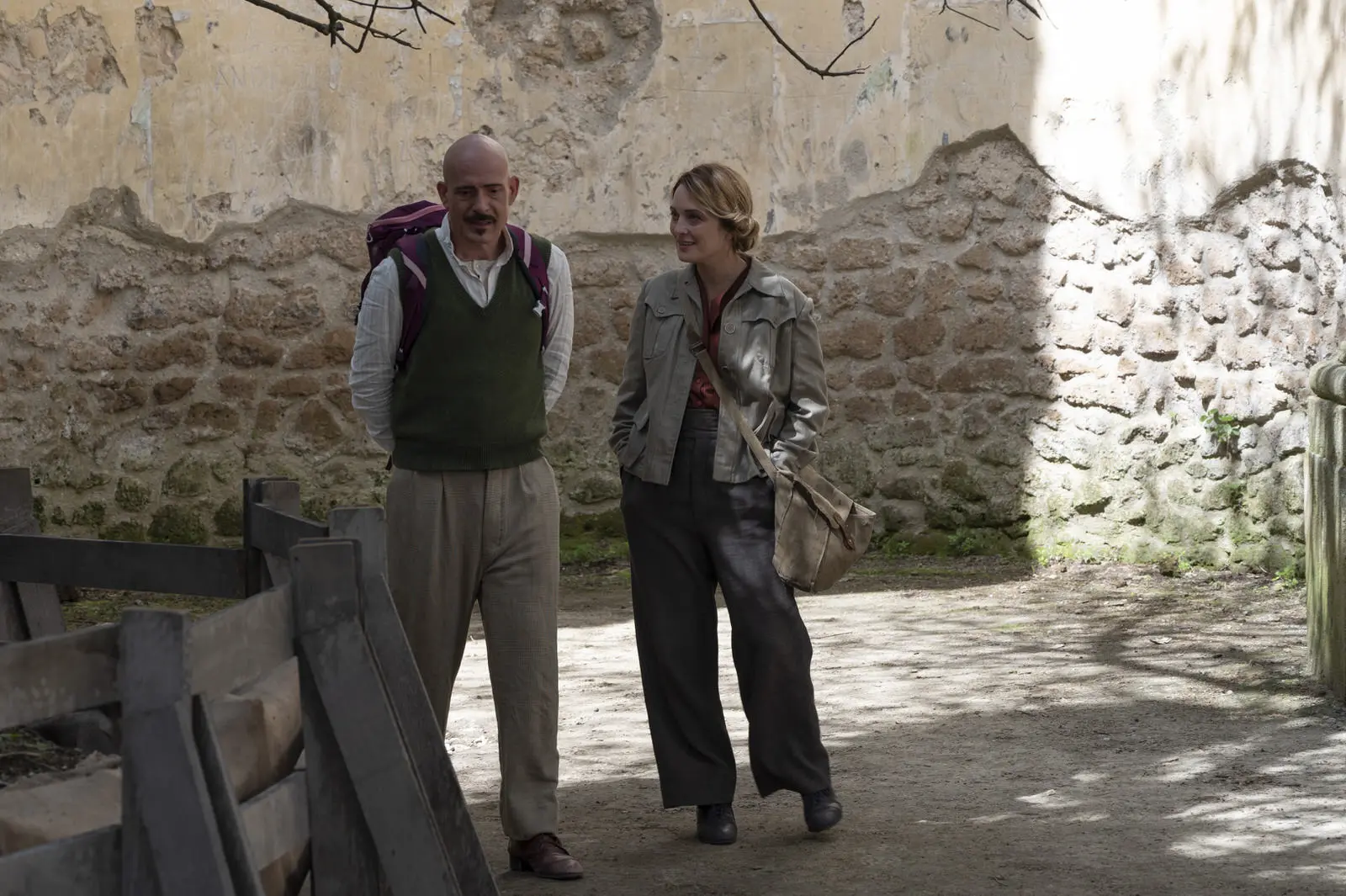
Gianmarco Tognazzi, Carolina Crescentini
Copyright: ph: Samanta Dalla Longa
Marco Giallini, Giampaolo Morelli
Copyright: ph: Samanta Dalla Longa
Marco Giallini, Gianmarco Tognazzi
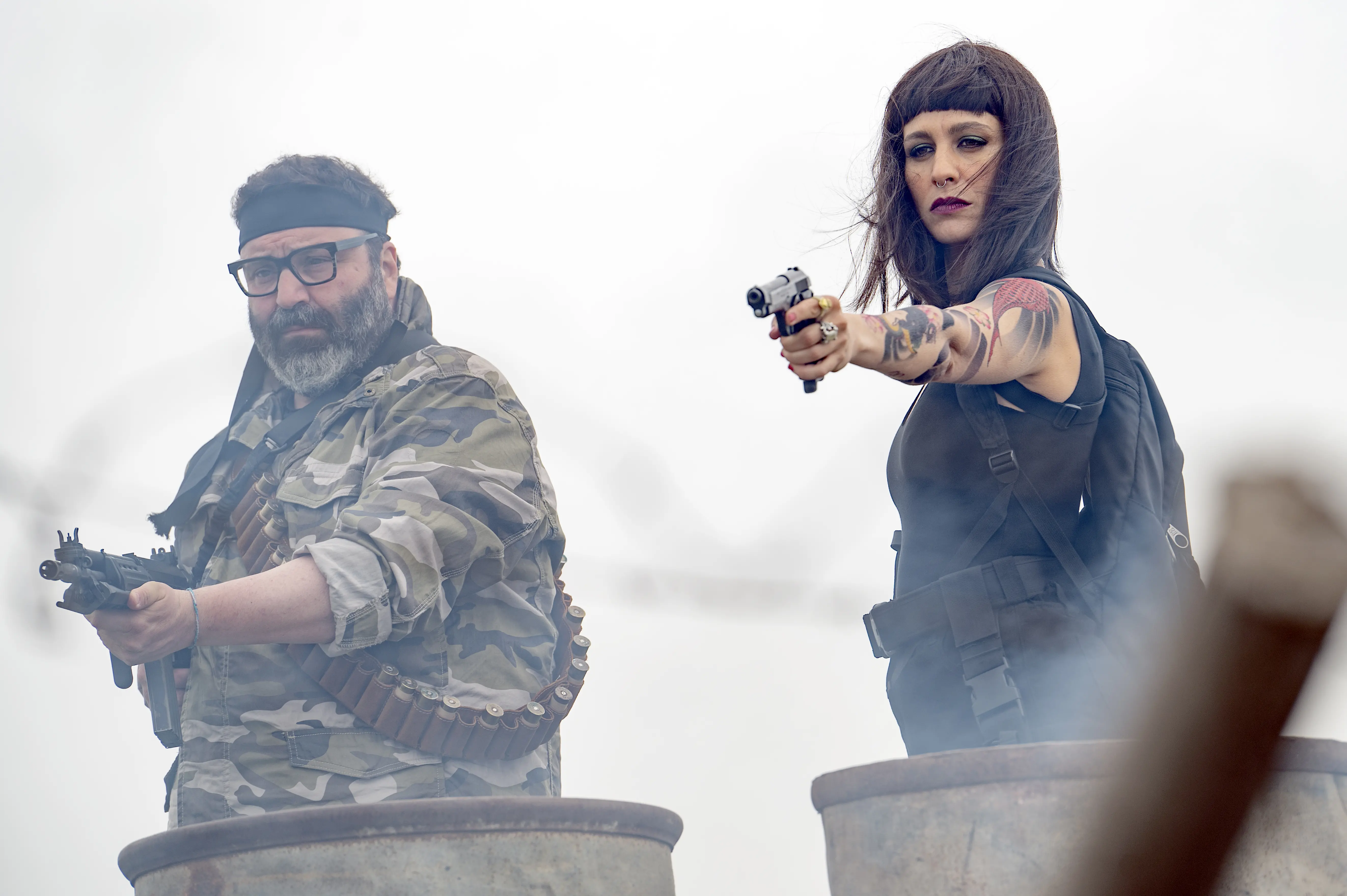
Copyright: ph: Samanta Dalla Longa
Massimiliano Bruno, Giulia Bevilacqua
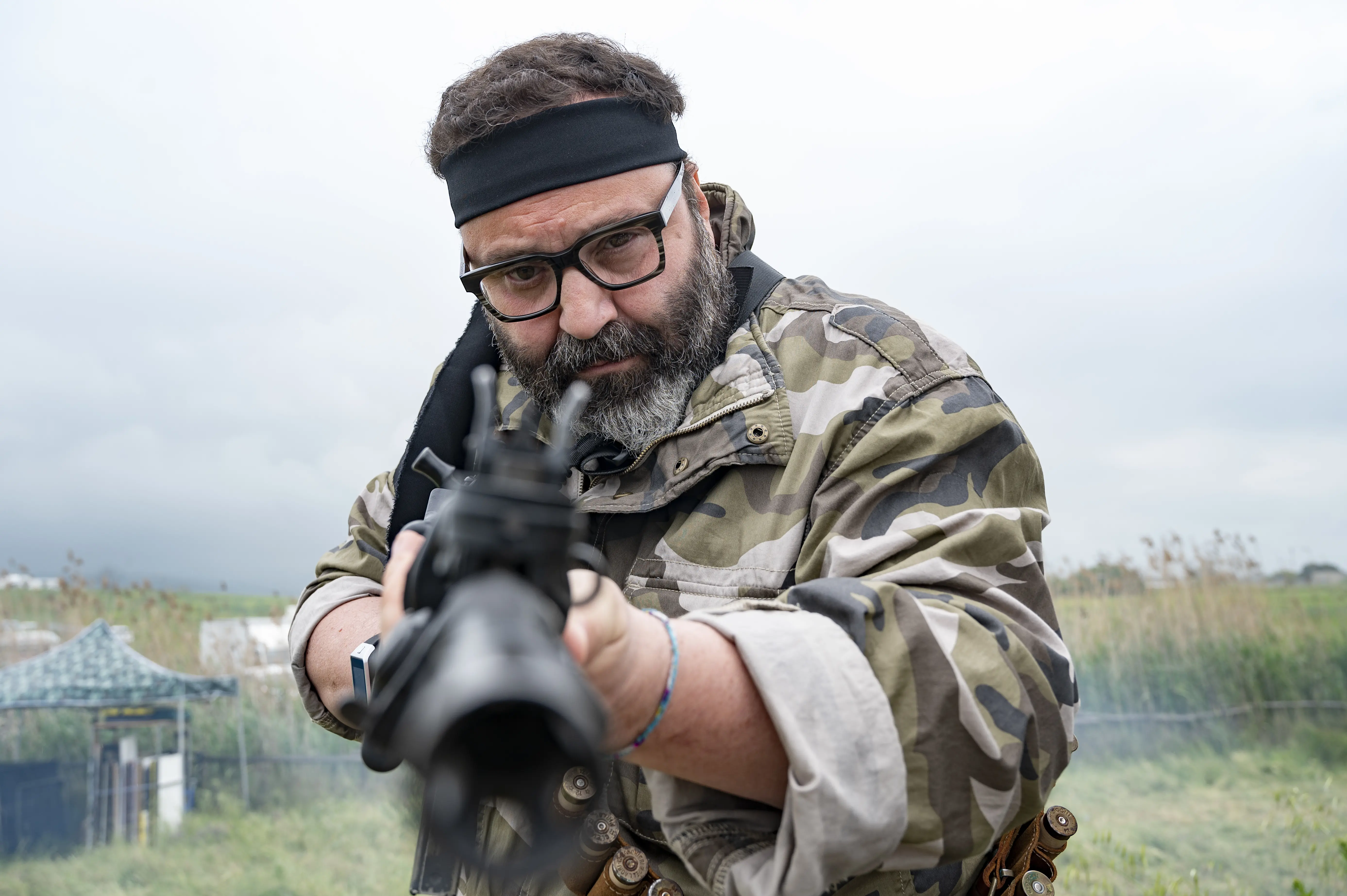
Copyright: Sky
Massimiliano Bruno
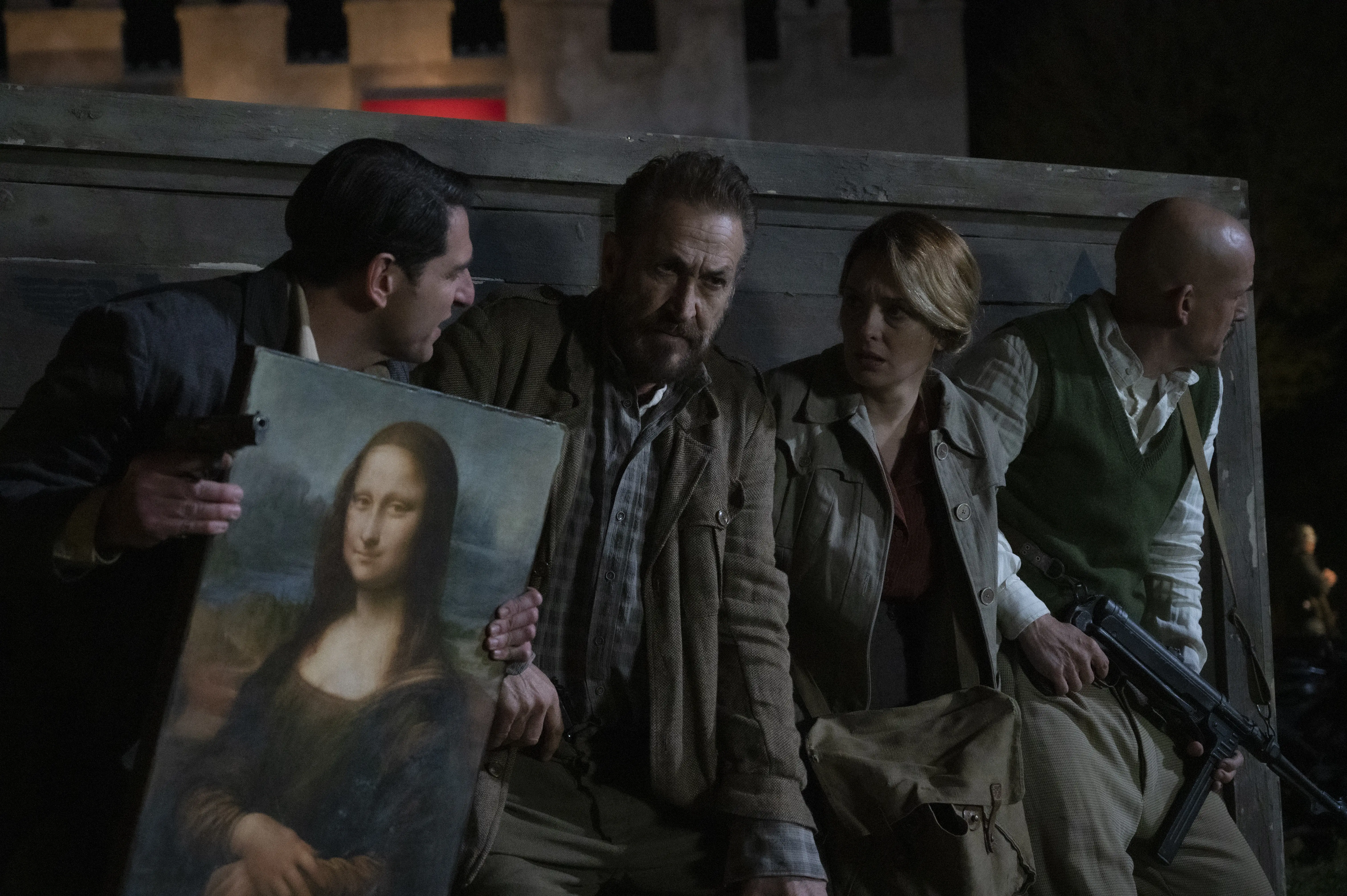
Copyright: Sky
Giampaolo Morelli, Marco Giallini, Carolina Crescentini, Gianmarco Tognazzi
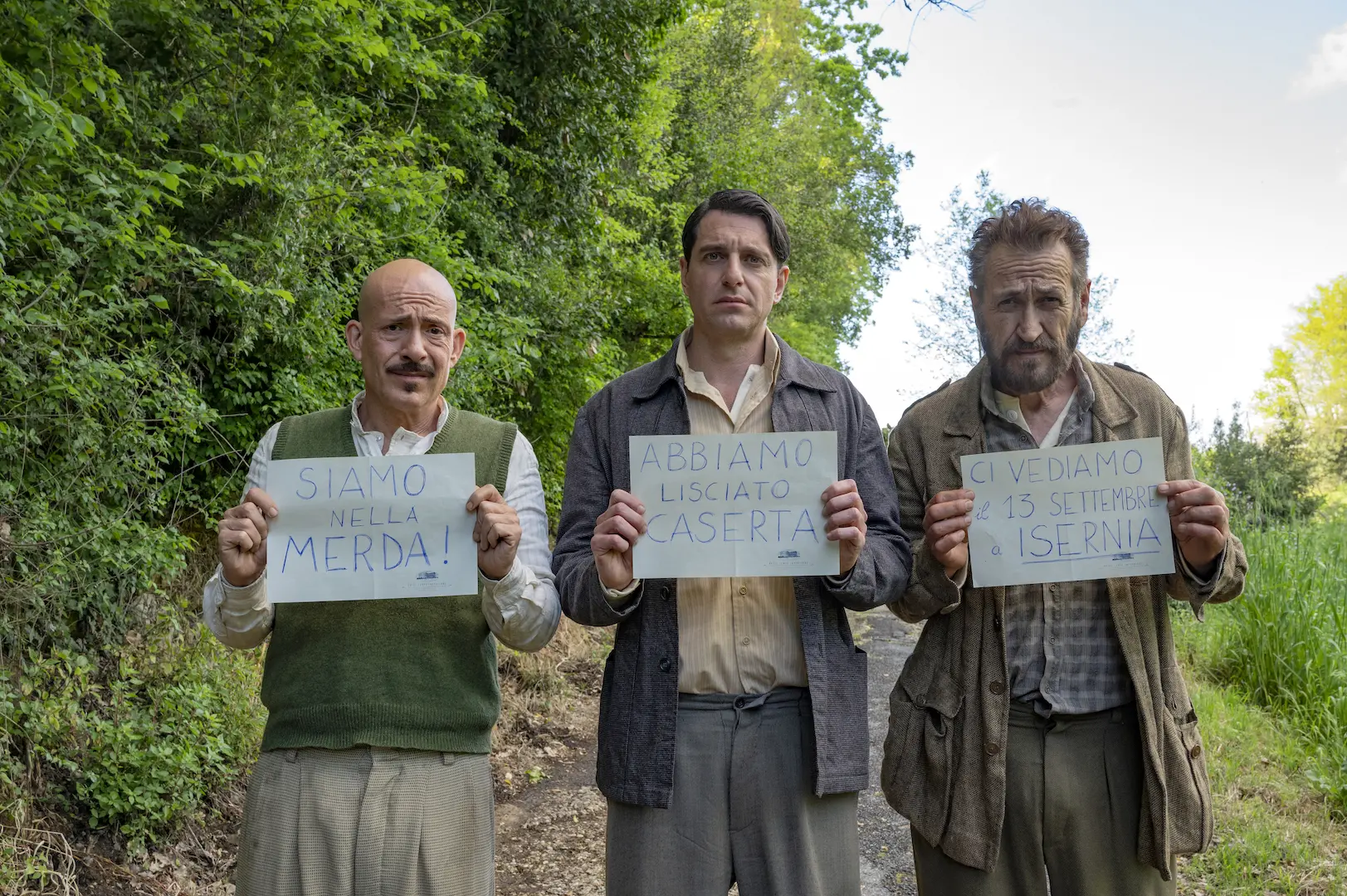
Copyright: ph: Samanta Dalla Longa
Gianmarco Tognazzi, Giampaolo Morelli, Marco Giallini
One of the biggest jumps in this version was the ability to manage up to . This allowed for complex layering, advanced picture-in-picture (PiP) effects, and more intricate storytelling that wasn't possible in earlier, simplified versions. 2. Enhanced Chroma Key (Green Screen)
Wondershare Filmora 9.1.0.11 -x64- Multilingual represents a "sweet spot" in video editing history. It provided a robust, professional timeline experience without the steep learning curve of software like Adobe Premiere Pro or DaVinci Resolve. Whether you are archiving old projects or looking for a stable editor for a legacy machine, this version remains a testament to Wondershare's "easy-to-use" philosophy.
The "x64 Multilingual" tag refers to its optimization for and its support for dozens of global languages, making it a universal tool for creators worldwide. 1. Up to 100 Video Tracks
This build utilized enhanced . By leveraging the power of your GPU (Graphics Processing Unit), it allowed for smoother real-time previews and significantly faster rendering times for 4K video. 4. Action Cam Tool
Because this is a 64-bit specific version, it requires a modern operating system to run efficiently: Windows 7/Windows 8.1/Windows 10 (64-bit only).
Even with the release of Filmora 12 and 13, some users prefer version 9.1.0.11 because it is on older hardware. It provides the essential tools—trimming, transitions, filters, and audio ducking—without the overhead of modern AI features that can sometimes slow down mid-range laptops. Conclusion
The 9.1.0.11 update refined the tool, giving users better control over offsets, tolerances, and edge feathering. This made it much easier to achieve a "clean" background removal for home-studio setups. 3. Faster Import and Export
Intel HD Graphics 5000 or later; NVIDIA GeForce GTX 700 or later. Why Version 9 Still Matters Today
Before the Version 9 series, Filmora was often seen as a basic tool. The 9.x era changed that by introducing a while keeping the drag-and-drop mechanics that users loved. Version 9.1.0.11 specifically focused on stability and expanding the library of built-in assets. Key Features of Version 9.1.0.11
While Wondershare Filmora has evolved significantly over the years, many editors still look back at version as a pivotal release that balanced performance with a user-friendly interface. This specific build solidified Filmora’s reputation as the "bridge" software—powerful enough for YouTube creators but simple enough for absolute beginners.
One of the biggest jumps in this version was the ability to manage up to . This allowed for complex layering, advanced picture-in-picture (PiP) effects, and more intricate storytelling that wasn't possible in earlier, simplified versions. 2. Enhanced Chroma Key (Green Screen)
Wondershare Filmora 9.1.0.11 -x64- Multilingual represents a "sweet spot" in video editing history. It provided a robust, professional timeline experience without the steep learning curve of software like Adobe Premiere Pro or DaVinci Resolve. Whether you are archiving old projects or looking for a stable editor for a legacy machine, this version remains a testament to Wondershare's "easy-to-use" philosophy.
The "x64 Multilingual" tag refers to its optimization for and its support for dozens of global languages, making it a universal tool for creators worldwide. 1. Up to 100 Video Tracks
This build utilized enhanced . By leveraging the power of your GPU (Graphics Processing Unit), it allowed for smoother real-time previews and significantly faster rendering times for 4K video. 4. Action Cam Tool
Because this is a 64-bit specific version, it requires a modern operating system to run efficiently: Windows 7/Windows 8.1/Windows 10 (64-bit only).
Even with the release of Filmora 12 and 13, some users prefer version 9.1.0.11 because it is on older hardware. It provides the essential tools—trimming, transitions, filters, and audio ducking—without the overhead of modern AI features that can sometimes slow down mid-range laptops. Conclusion
The 9.1.0.11 update refined the tool, giving users better control over offsets, tolerances, and edge feathering. This made it much easier to achieve a "clean" background removal for home-studio setups. 3. Faster Import and Export
Intel HD Graphics 5000 or later; NVIDIA GeForce GTX 700 or later. Why Version 9 Still Matters Today
Before the Version 9 series, Filmora was often seen as a basic tool. The 9.x era changed that by introducing a while keeping the drag-and-drop mechanics that users loved. Version 9.1.0.11 specifically focused on stability and expanding the library of built-in assets. Key Features of Version 9.1.0.11
While Wondershare Filmora has evolved significantly over the years, many editors still look back at version as a pivotal release that balanced performance with a user-friendly interface. This specific build solidified Filmora’s reputation as the "bridge" software—powerful enough for YouTube creators but simple enough for absolute beginners.